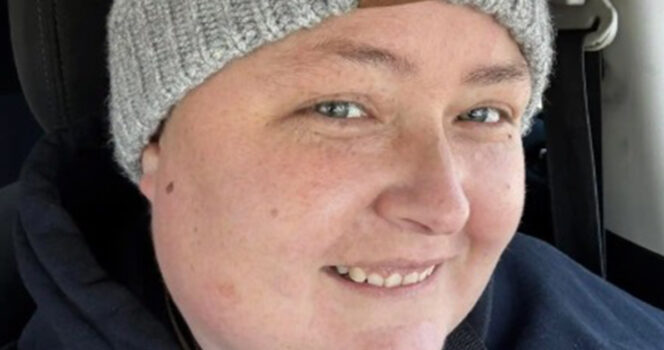
The family behind 1000-Lb. Sisters is facing heartbreaking news.
This week, Amanda Halterman — sister to Tammy and Amy Slaton — shared on Instagram that their beloved cousin, Katie Slaton, has passed away after a difficult battle with cancer.
She was only 37, leaving her loved ones devastated.
Died on Monday Katie Slaton, cousin to Amy and Tammy Slaton, has died after a courageous fight with cancer. She appeared in season five of the TLC series following Tammy’s release from a weight-loss rehab center and quickly became a fan favorite for her warmth and close bond with the sisters.
Earlier this year, Katie was diagnosed with stage four gastric adenocarcinoma, a rare and aggressive form of stomach cancer. She underwent chemotherapy in the months that followed, but sadly, she passed away on Monday, August 25, at Linda White Hospice House in Evansville, Indiana.
GoFundMe On Tuesday, her cousin Amanda Halterman — also Amy and Tammy’s sister — shared the heartbreaking news on Instagram. Posting a photo of herself with Katie, Amanda wrote:
“It is with a completely crushed heart and spirit that I have to post this. My little cousin went to sit at the feet of Jesus yesterday. She was a force to be reckoned with and showed love that was accepting and given freely. She was the life of the party and my best friend.”
She continued:
“Please pray for everyone who loves her. Thank you all who has come out and supported her. #cancerscks.”
Amanda later added another emotional tribute:
“I know both our grandparents and friends were there to welcome you home. Please pray for my aunt, uncle, and cousins — but mostly for the babies and for Natalie to be strong. Please pray for everyone who loves her. 💔 Thank you all who has come out and supported her. #cancerscks.”

Have not yet spoken publicly Tammy and Amy have not yet commented publicly on Katie’s passing, but earlier this year Tammy reached out to fans for support. In January, she shared a GoFundMe page for Katie’s treatment, writing:
“Y’all I’m so sorry to be asking a big favor like this but if anyone can help, even if it’s a dollar, it would help my cousin out so much. She has been on my show but this is something new. Our family just found out about her having cancer.
Our fans have been there for us for so long now and y’all mean the world, so any act of kindness is and will be greatly appreciated. Thank you so much and before anyone asks, yes I’ve donated myself.”
Born on September 17, 1987, in Morganfield, Kentucky, Katie was the daughter of Jerry and Frances Slaton. She loved spending time outdoors fishing, listening to music, and being surrounded by family and friends.
Katie’s passing has left her family, friends, and fans heartbroken. Loved ones are remembering her as a bright light — someone whose energy and love touched everyone around her.
11,000 lives this year The American Cancer Society estimates that in 2025, more than 30,000 people in the U.S. will be diagnosed with stomach cancer — roughly 18,000 men and 12,000 women.
Tragically, the disease is expected to claim nearly 11,000 lives this year, with men facing a slightly higher risk.
While stomach cancer accounts for only about 1.5 percent of all new cancer cases in the U.S., its impact on patients and families is devastating.
The symptoms According to the Mayo Clinic, stomach cancer can be difficult to detect because it often causes no clear symptoms in its early stages. Many signs don’t appear until the disease has already advanced.
Still, there are warning signs to watch for — many involving appetite, digestion, and energy levels.
Symptoms may include:
- Trouble swallowing
- Persistent indigestion or stomach discomfort
- Frequent heartburn
- Nausea or vomiting
- Pain or pressure in the abdomen
- Bloating after meals
- Feeling full quickly
- Loss of appetite
- Unexplained weight loss
- Extreme fatigue or weakness
- Black, tar-like stools (a sign of internal bleeding)
If you notice any of these symptoms, it’s important to speak with a doctor. Early detection can make a significant difference.