Hollywood in the 1950s was a glamorous yet ruthless industry, where the fate of actors and actresses was often controlled by powerful studios.
Among the many talented stars of the era, one actress stood out for her stunning beauty, undeniable talent, and tragic career setback.
Once destined for greatness, she was suddenly blacklisted by one of Hollywood’s biggest studios, leaving many wondering what went wrong…
In the early 1950s, Lee Grant was considered one of the most beautiful women in Hollywood.
With her classic features, graceful presence, and captivating screen performances, she quickly caught the attention of major studios. Producers saw her as the next big star, casting her in a series of films that highlighted her charm and versatility.
Grant made her film debut in the 1951 version of Detective Story, starring Kirk Douglas, which earned her an Academy Award nomination for Best Supporting Actress and the Best Actress Award at the Cannes Film Festival.
Audiences loved her, and critics praised her performances. Everything seemed to be going perfectly — until it wasn’t.
Mysterious Fall from Grace
Despite her rapid success, Grant’s career took a shocking turn when she was suddenly banned from one of Hollywood’s top studios. The decision was swift and left many confused. How could a rising star, with everything working in her favor, be pushed out of the industry that had once embraced her?
Rumors quickly began to spread. Some claimed she had clashed with powerful executives, refusing to comply with their demands. Others suggested that her personal life had become an issue for the studio, as Hollywood was known for tightly managing the public image of its stars. A few even believed she had been blacklisted for reasons beyond her control — possibly due to the harsh politics of the entertainment industry.
CBS reported that Grant delivered an emotional eulogy in 1951 at the memorial service for actor J. Edward Bromberg, during which she implied that his death was caused by the stress of being called before the House Un-American Activities Committee (HUAC). For the next 12 years, her career would never be the same.
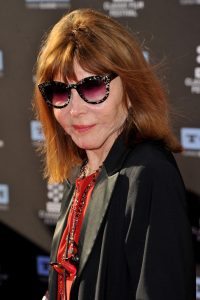
The Cost of Hollywood’s Power Struggles
During Hollywood’s Golden Age, studios held enormous power over actors. If a star went against the industry’s unwritten rules, they could be blacklisted, lose their contracts, and see their careers destroyed almost overnight. Many talented performers watched their dreams fall apart simply because they did not fit the image studios wanted.
Grant, once on the road to superstardom, became another casualty of the studio system.
Although Grant later appeared in projects such as Valley of the Dolls, Columbo, Shampoo, and Mulholland Drive — eventually winning an Academy Award for Best Supporting Actress — she struggled to find steady work throughout the 1950s and early 1960s. The offers slowed down, and her name gradually disappeared from the headlines.
A Legacy That Lives On
Though her career was unfairly disrupted, her beauty, talent, and the films she appeared in remain a reminder of what might have been. Hollywood may have moved on, but movie lovers still remember her as one of the most striking and underrated stars of her era.
Her story serves as a reminder of how unpredictable fame can be, and how even the brightest stars can be dimmed by forces beyond their control.
Today, in a time when actors have more freedom than before, her struggles continue to highlight the darker side of classic Hollywood — a world where talent alone was not always enough to survive.