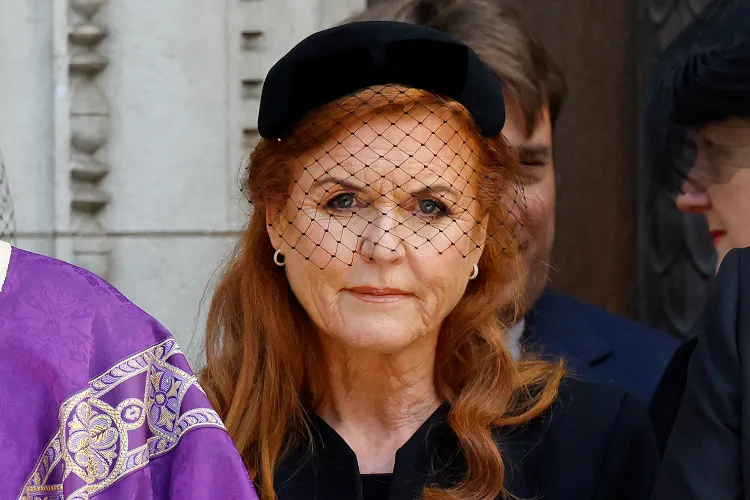
Sarah Ferguson is under renewed scrutiny following the arrest of her ex‑husband, the former Prince Andrew, and fresh attention on the extent of her relationship with the late convicted sex offender Jeffrey Epstein.
The release of new Epstein‑related material on Jan. 30 by the U.S. Department of Justice has shifted focus back to Ferguson’s actions — including her efforts to stay in contact with Epstein after his 2009 prison release for soliciting prostitution from a minor, as she faced mounting financial pressures.
Ferguson has weathered scandals before — often managing to recover through media appearances, book tours and carefully crafted interviews.
“This time, no one is going to give her the airspace,” royal author Ingrid Seward tells PEOPLE in this week’s exclusive cover story.
Andrew Lownie, author of Entitled: The Rise and Fall of the House of York, adds that Ferguson — who has not been seen publicly for months and is believed to be hiding abroad — “will find it very hard to come back.” A friend calls the moment sobering for the former Duchess of York.
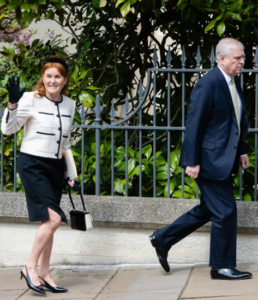
“She always thinks she can bounce back,” the insider says. “But this isn’t something that can blow over.”
Ferguson, 66, has been in retreat since Andrew’s royal title was removed by King Charles in October 2025 amid renewed scrutiny of his Epstein ties, but her ex‑husband’s arrest may be the most devastating blow yet.
“This has really hit her,” the friend adds of Ferguson, who has reportedly spent recent months at luxury wellness retreats in Switzerland and Ireland. There is also speculation about whether she could be questioned as the investigation into Andrew continues. The former Duke of York remains released under investigation following his Feb. 19 arrest.
Attorney George Kampanella, partner and head of business crime at Taylor Rose in the U.K., tells PEOPLE that Ferguson would not be shielded from police questioning if approached.
“English law does not provide a blanket ‘spousal privilege’ in the way some assume from TV legal dramas,” Kampanella says. “There is no general protection that allows a spouse, or former spouse, to refuse even to be questioned by police. If approached, a former spouse may be asked to assist an investigation or provide evidence.”
For now, such a scenario remains hypothetical.
“If she were approached by investigators, it would reflect process, not presumption,” Kampanella says. “And as with Andrew himself, the legal system will proceed not by association, but by proof.”
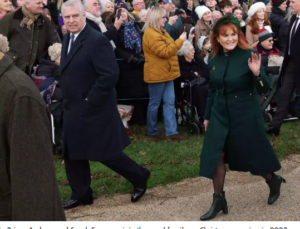
For years, Andrew’s family occupied a peculiar place within the monarchy — prominent enough to benefit from status, yet peripheral enough to avoid sustained scrutiny. His sense of entitlement was not only indulged but reinforced from childhood. Raised during a period when Queen Elizabeth had settled into her reign and could be more present, he grew up protected — and rarely corrected.
“He has been pampered all the way through his life, in this bubble,” Lownie says of the former Duke of York, 66. “Status is everything to him — it’s his only sense of identity.”
If Andrew embodied entitlement, Ferguson became its most adaptable beneficiary. After their 1996 divorce, she emerged without the large financial settlement that might have allowed her to quietly step away from royal life. Unlike Princess Diana’s reported $22 million settlement and annual allowance after her divorce from the future King Charles, Ferguson’s was estimated at roughly $475,000.
“She was introduced to this lifestyle and kept living it,” Robert Jobson, author of The Windsor Legacy, tells PEOPLE. “She was desperate for money.”
What followed was a series of reinventions — spokeswoman, brand ambassador, author, television personality — each relying on the currency of her royal title as she continued living with Andrew at Royal Lodge, the controversial residence he was evicted from last fall. From Weight Watchers to Wedgwood china, memoirs to children’s books, Ferguson’s ventures varied, but the strategy stayed the same: proximity for profit.
“She’s always been a fighter — that’s her trademark,” another friend tells PEOPLE of her ability to rebound. Though technically out of palace life, she was repeatedly welcomed back into royal spaces — Ascot, Wimbledon, Sandringham and various holidays.
“They turned a blind eye,” Lownie says.
That arrangement was tested in 2010, when Ferguson was filmed in a News of the World sting appearing to offer access to Andrew — meetings and introductions — in exchange for cash. She withdrew from public life, only to reemerge later, forgiven and seen as a stabilizing presence in her ex‑husband’s life. Now, the system that once enabled such recoveries has collapsed, and the former couple’s daughters, Princess Beatrice and Princess Eugenie, face an uncertain future within the royal fold.
The York family’s trajectory reflects a familiar royal pattern: with each shift in the line of succession, spares are left to navigate lives shaped by status but thin on purpose.
“They have all the privileges with none of the responsibilities,” Seward says. “And that can lead them into all kinds of trouble.”